

Prevailing Torque Lock Nuts Supplier
Nylon inserts melt. Washers back off. When an assembly runs hot, cycles constantly, or simply can't afford a plastic component in the load path, a different locking mechanism is needed. Valley Nut & Bolt supplies prevailing torque lock nuts built with a deformed or tapered thread that creates consistent resistance across the full thread engagement. No nylon, no plastic, nothing to degrade under heat. We've sourced these for engine assemblies, exhaust systems, and heavy equipment applications from our Olympia, Washington warehouse since 1969.
Need an All-Metal Lock Nut That Won't Quit Under Heat?
Nylon isn't built for engine bays, exhaust systems, or high-cycle industrial equipment, and neither should your fastener spec be. Send Valley Nut & Bolt your drawing or requirement and we'll source the prevailing torque lock nut, distorted-thread, 2-way, or two-piece, that holds up to your application.
What Is a Prevailing Torque Lock Nut?
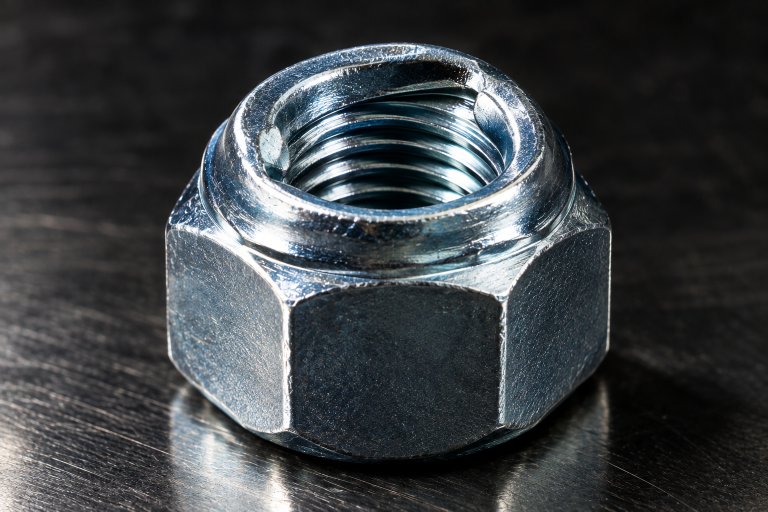
A prevailing torque lock nut generates its locking resistance mechanically, through the metal of the nut itself, rather than through a nylon collar or a second jam nut. The threads at the top of the nut are deformed, distorted, or manufactured slightly out-of-round so they interfere with the bolt thread as it's run through. That interference requires measurable torque to turn the nut even before it contacts the work surface. That's where the name comes from: the nut exhibits "prevailing torque" resistance throughout installation.
Because there's no plastic or nylon insert involved, prevailing torque lock nuts hold their locking properties in environments that would destroy a nylon insert lock nut, and they don't carry the same reuse limitations as a friction-based design.
Prevailing Torque Lock Nut Styles We Supply
The most common and cost-effective design. A section of the nut's top threads is deformed slightly out-of-round after machining, creating an interference fit with the bolt. This style covers the majority of general industrial and heavy equipment applications that need a metal-only locking nut.
A variation on the distorted-thread design where only the very top threads are deformed, concentrating the locking action in a smaller section of the nut. This design is common where a slightly lower installation torque is preferred while still eliminating nylon.
Unlike a standard distorted-thread nut, which locks in one direction of travel, a 2-way lock nut (also called a reversible lock nut) is designed to hold prevailing torque whether it's run onto the bolt from the top or the bottom. This makes it useful for assembly lines and field crews who can't guarantee orientation every time, or for applications where the nut may need to be backed off and reinstalled from either face.
A heavier-duty configuration using a spring-steel collar or insert mechanically locked into the nut body, offering repeatable locking torque across multiple installation and removal cycles. Useful for maintenance-heavy assemblies that get taken apart routinely.
For assemblies that also need a wider bearing surface, we supply prevailing torque locking action combined with an integrated flange. See our dedicated flange lock nuts page for the full breakdown of flange styles.
When to Specify Prevailing Torque Over Nylon
If your assembly checks any of these boxes, an all-metal prevailing torque lock nut is the right call over a nylon insert:
- Operating temperatures above roughly 250°F (nylon inserts soften and lose grip beyond that range)
- Engine, exhaust, or exposure to direct heat sources
- High-vibration equipment where a plastic component could fatigue or shrink over time
- Assemblies exposed to chemicals or solvents that degrade nylon
- Applications requiring an all-metal fastener path for fire code, spec, or contamination reasons
- Assemblies where the nut may be installed from either direction (2-way / reversible designs)
For general-duty assemblies at moderate temperatures where reuse and easy hand-installation matter more than heat resistance, our nylon insert lock nuts are typically the more economical choice.
Prevailing Torque Lock Nuts vs. Nylon Insert Lock Nuts
| Comparison Point | Prevailing Torque (All-Metal) | Nylon Insert |
|---|---|---|
| Locking mechanism | Deformed/distorted thread | Nylon collar |
| Max temperature | Rated for high heat (well above 250°F, varies by material) | ~250°F |
| Reusability | Multiple cycles depending on design | Limited (a few reinstalls) |
| Directional installation | Some styles (2-way/reversible) work from either face | Single direction only |
| Best for | Engine, exhaust, high-heat, high-vibration | General industrial, moderate temp |
| Installation torque | Higher, consistent throughout thread engagement | Lower, concentrated at nylon collar |
Industries That Depend on Prevailing Torque Lock Nuts
- Heavy industrial and manufacturing equipment
- Marine applications with exposure to heat and corrosion
- Infrastructure and government projects with strict material specs
- Engine, generator, and exhaust system assembly
- Oilfield and petrochemical equipment
Valley Nut & Bolt supports construction, heavy industrial, infrastructure, manufacturing, government, and marine work with prevailing torque lock nuts sourced to spec, not just pulled from a bin.
Frequently Asked Questions About Prevailing Torque Lock Nuts
A prevailing torque lock nut creates locking resistance through a deformed or distorted metal thread, with no plastic component. A nylon insert lock nut relies on a nylon collar to grip the bolt thread. The all-metal design holds up in higher heat and harsher chemical environments than nylon can tolerate.
A 2-way lock nut, also called a reversible lock nut, is a prevailing torque design that holds locking resistance whether it's threaded onto the bolt from the top or the bottom. Standard distorted-thread lock nuts are typically directional, so a 2-way design is specified when orientation can't be guaranteed during assembly or when the nut needs to be run on from either face.
Because there's no nylon or plastic component, prevailing torque lock nuts can be used well beyond the roughly 250°F ceiling of nylon insert designs, making them suitable for engine, exhaust, and other high-heat assemblies. Exact limits depend on the base material and finish.
Distorted-thread designs can typically be reused a limited number of times before the locking interference wears down. Two-piece, all-metal designs with a spring-steel collar generally hold up to more installation and removal cycles.
Yes. We supply serrated flange lock nuts that use a prevailing-torque-style locking mechanism along with an integrated flange for added bearing surface. See our flange lock nuts page for details.
Do you supply prevailing torque lock nuts to military or government specs?
Ask Our Team
Give us a call or fill out the form and one of our team members will be in touch as soon as possible to answer your questions.
*marks required fields
360-754-4877
